Adding a User
IMPORTANT: Prerequisites to adding a user:
- The user's organizational structure must already exist in the system. For more information, please see Organizational Structure.
- The user's supervisor must already be a user in the system and must be the supervisor of the team to which you wish to add the user
To add a user in User Onboarding, click on the "Add New User Onboarding Record" button.
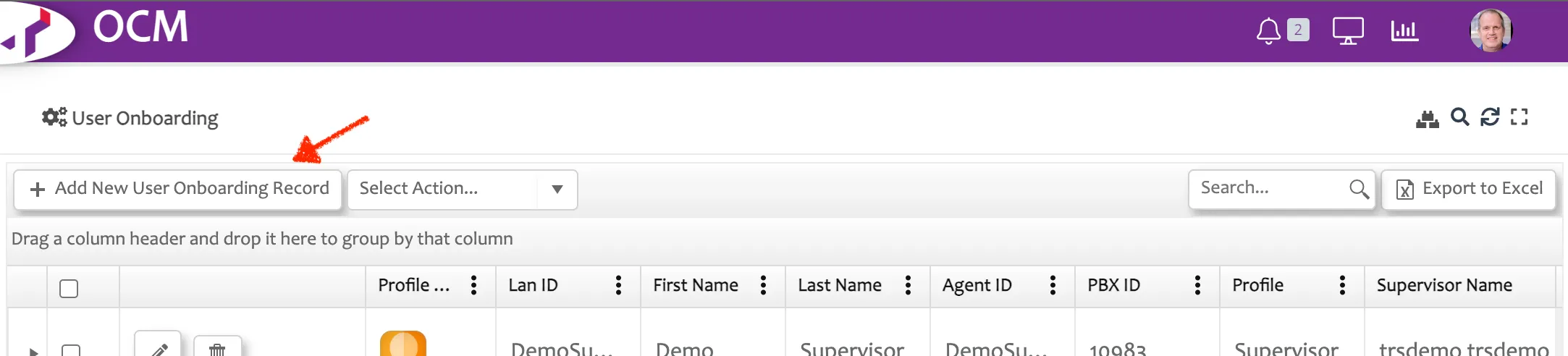
When you click on "Add New User Onboarding Record", you will see step 1 of the user onboarding flow.
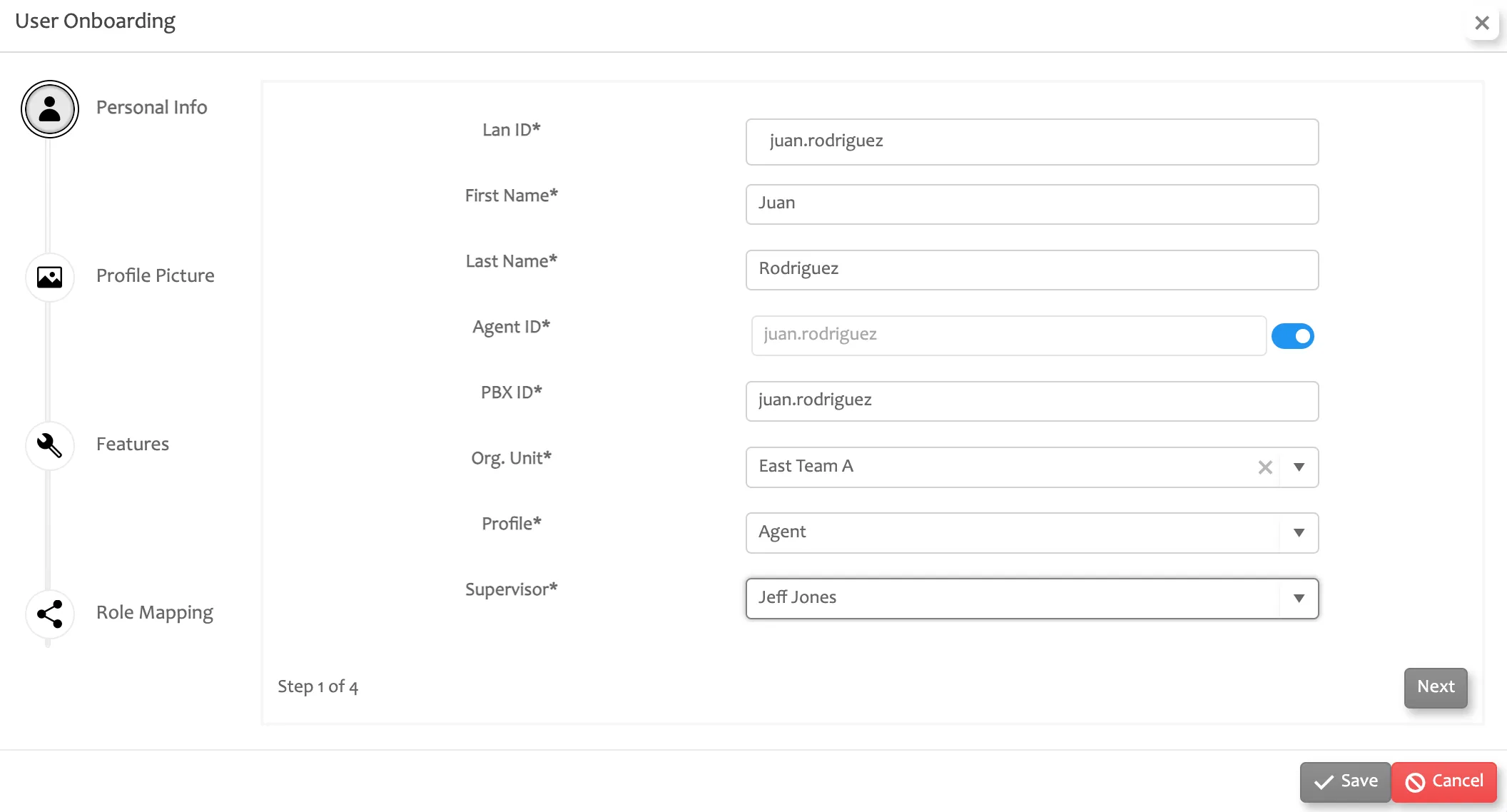
Personal Info
Step 1 of User Onboarding is entering the user's personal information.
- Lan ID - this represents the user's identification in the system and is often the same as "Agent ID". This needs to be unique across the system.
- First Name and Last Name - displayed throughout the system
- Agent ID - select the toggle on the right end of this field to make it the same as the Lan ID
- PBX ID - this can be a unique number/extension or simply the same as the Lan ID.
NOTE: there is a system setting which allows entry of non-numbers in PBX ID - if you want to be able to allow entry of letters in PBX ID and your system is not allowing that, let your IT support know.
- Org Unit - Identify the level/team with which this user is associated. See image below for an example.
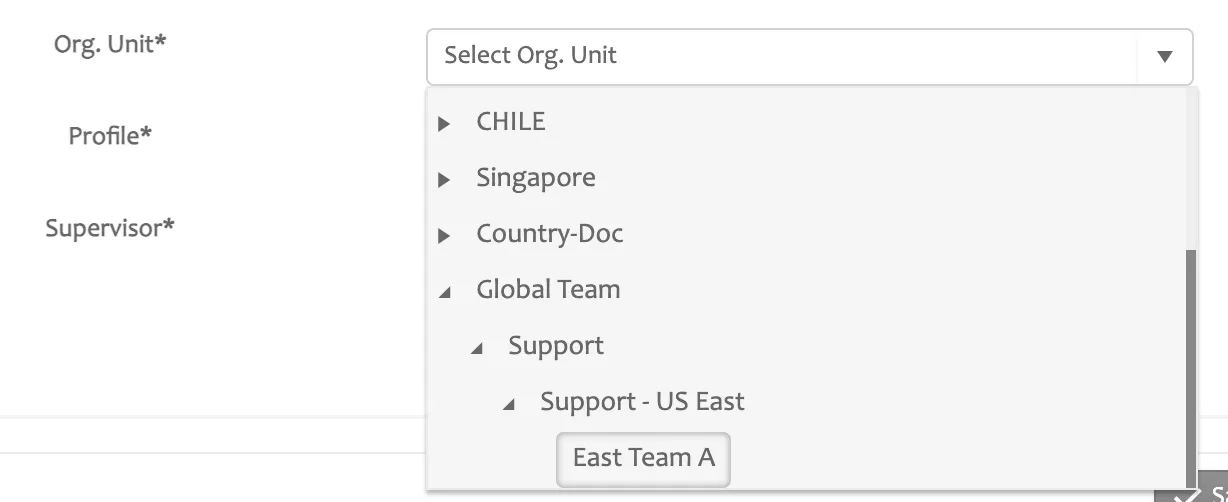
NOTE: An agent (a user with Profile = Agent) can only be a member of a Team. A Team is the lowest level of the hierarchy ("East Team A" in the image above). A supervisor (a user with Profile = Supervisor) can be a member of any level of the hierarchy.
- Profile - select either "Agent" or "Supervisor". Please see NOTE directly above.
- Supervisor - click the drop down and select the agent's supervisor from the list. If the supervisor's name doesn't appear, then that supervisor is not associated with that Team yet.
IMPORTANT NOTES RE: SUPERVISORS:
- A supervisor has access to all agents of all teams within the hierarchy to which they are assigned. Example: if Department "Support" has 2 Teams within it, "Team A" and "Team B", then assigning a Supervisor to the Department Support will provide that Supervisor with access to all agents assigned to Team A and Team B.
- More than 1 supervisor can be assigned to the same specific group in hierarchy. For example, The Support Department could have multiple Supervisors assigned to it (e.g., so that the Supervisors can back each other up when managing their respective teams).
- All users require that 1 Supervisor be assigned EXCEPT those at the Country (highest) level where the Supervisor = "NA" (not applicable).
Once you have completed all of the above fields, click "Next".
Profile Picture
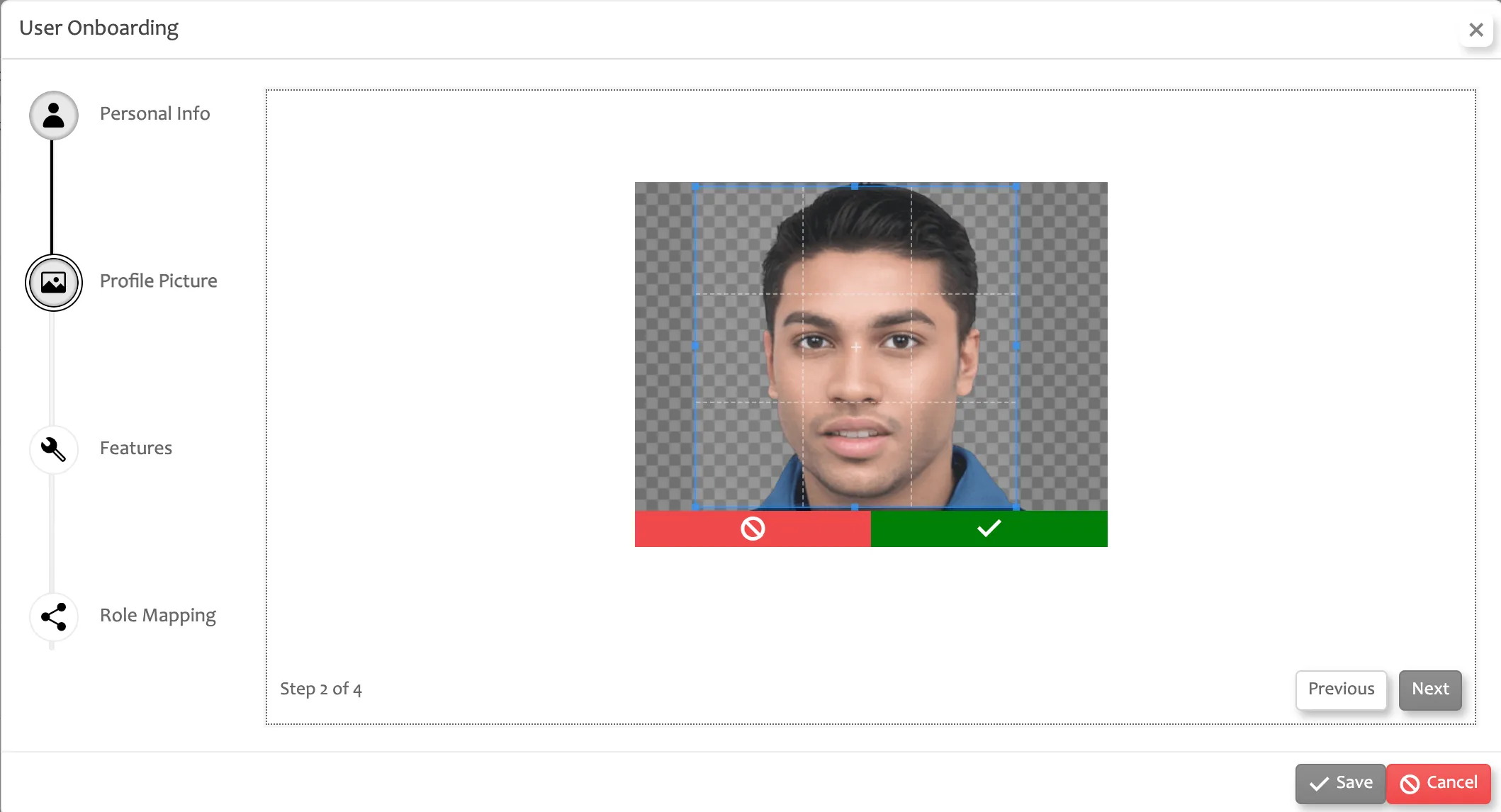
In step 2, you specify the image which will be used to authenticate an agent's face. Once you have selected a facial image, size the bounding box shown to include below the chin and the top of the head. Select the green check button.
IMPORTANT: The quality of face authentication is related to the quality of the profile picture supplied. Please refer to Profile Pictures in the Agent help for more details.
Features (agent-specific)
The feature selections on step 3 of User Onboarding are agent-specific. In most cases, you are safe making no changes here and simply clicking on "Next".
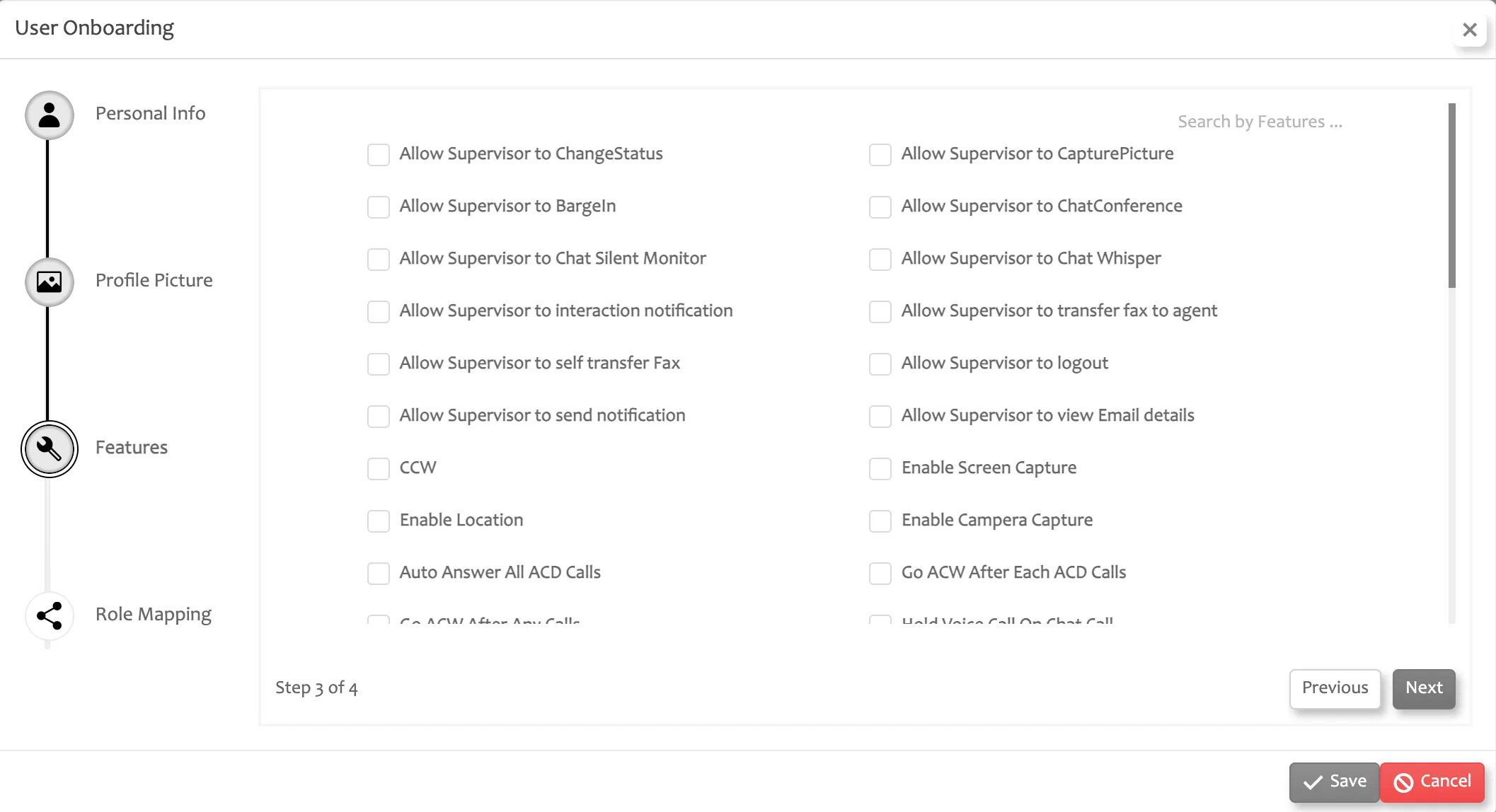
NOTE: There are a few situations where features are assigned to users, but in general it is best practice to assign features at the Team or higher level. For more information, please see Feature Templates
Role Mapping
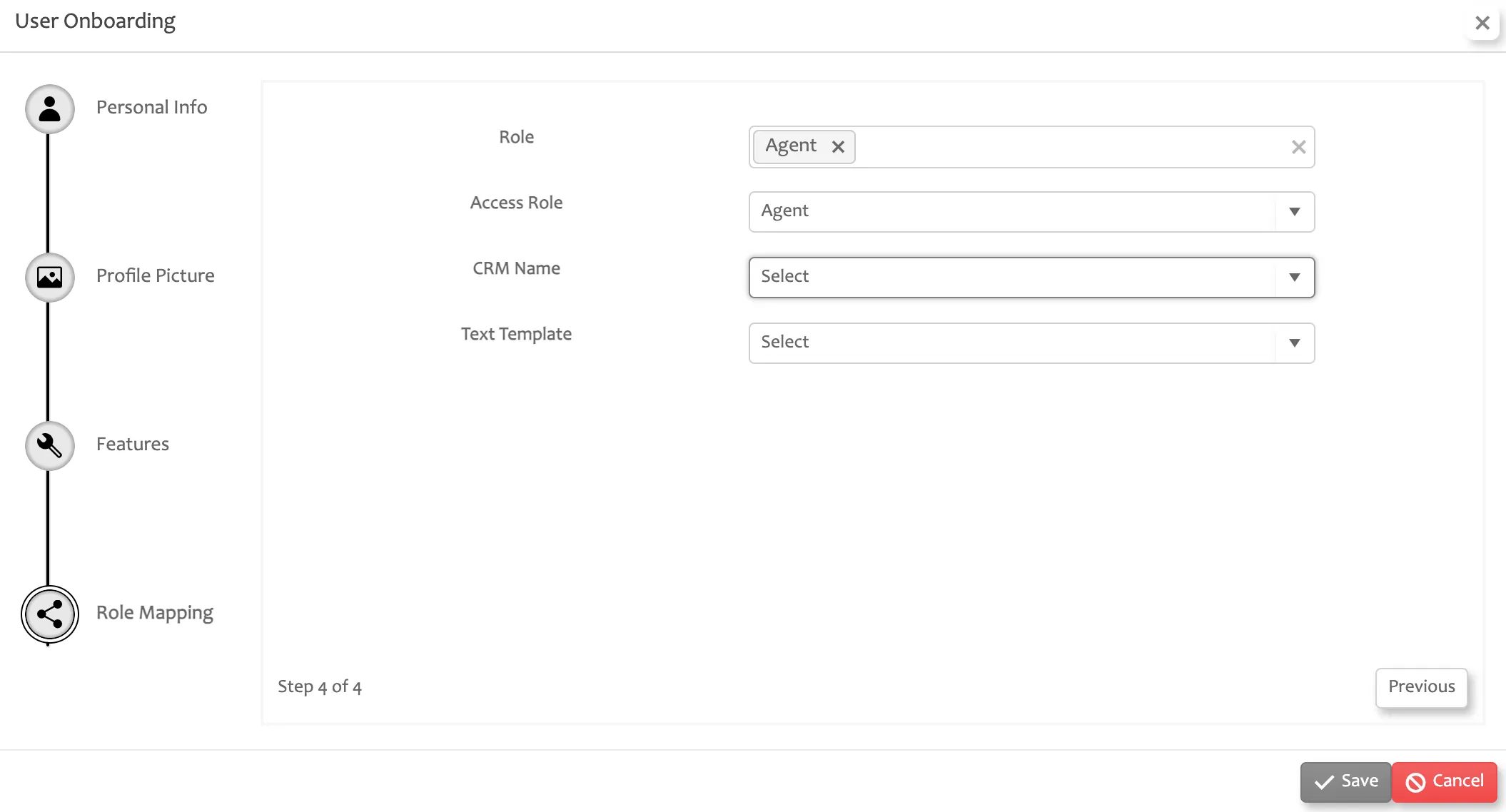
The last step of User Onboarding is assigning 1 or more roles to the user. In most cases, you will specify a role such as "Agent" to agents and "Supervisor" to supervisors. You can leave Access Role, CRM Name, and Text Template blank.
Speak to your system administrators for more guidance on what role(s) to use. Roles are related to the following:
- Remote Security Rules - these define what should happen when a given security event occurs in the Secure Work from Home application on the agent's desktop.
- What administrative and/or reporting access a user with this role should have. Please see Roles for more information.
Click "Save" to create the user.
Modifying a User
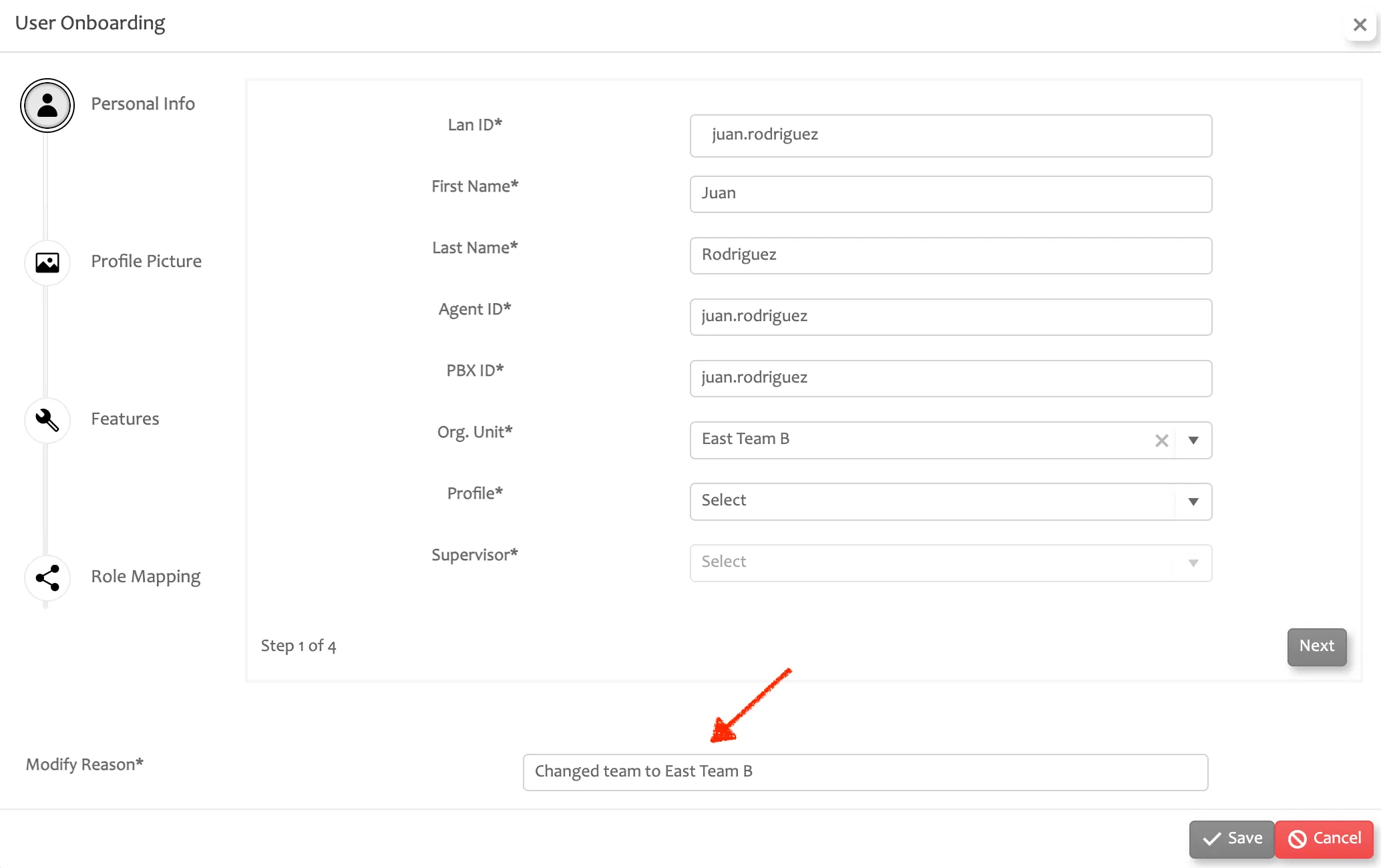
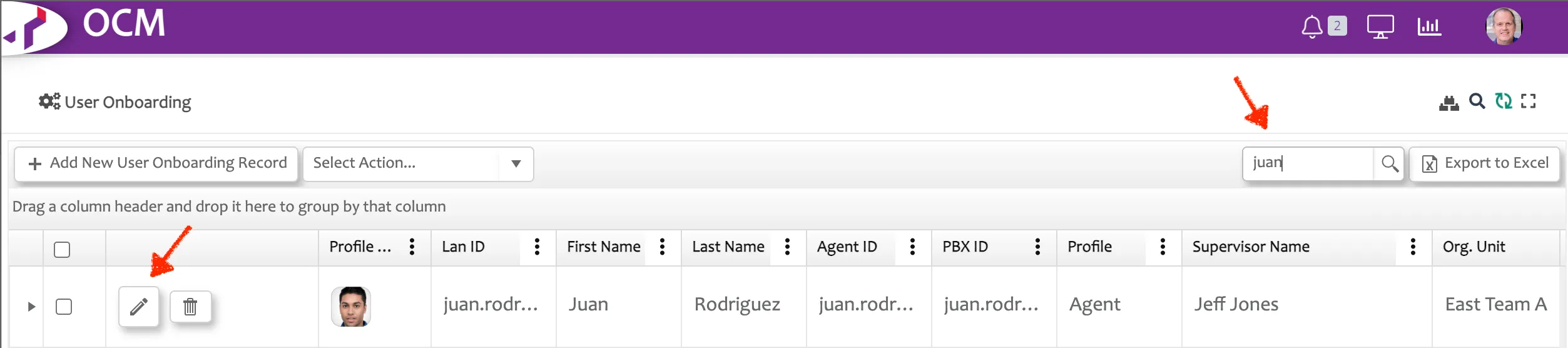
To modify an existing user's configuration, go back into User Onboarding and locate the user. You can use the search box in the upper right to search by first or last name or Lan/Agent ID. Then click the pencil button for the desired user in the results displayed. See below.
When you make a change to a user, you must specify a reason for modification. This is done in the Modify Reason field which appears on all admin pages in OCM and is required in order to save any changes. This is to communicate to auditors after the fact why a change was made.